


 Abhyank Srinet
The LBS MBA is a full-time, internationally focused MBA at London Business School in the UK. Students can graduate in 15, 18 or 21 months. The published tuition fee for the August 2026 intake is approximately ₹1.55 crore (£123,950), while LBS reports an average GMAT score of around 645 on the current exam scale. The programme is particularly relevant to professionals pursuing careers in consulting, finance, technology, entrepreneurship and general management.
London Business School MBA Quick Facts
| Category | Details |
|---|---|
| Business school | London Business School |
| Location | London, United Kingdom |
| Programme | Full-time MBA |
| Duration | 15, 18 or 21 months |
| Published tuition, August 2026 intake | Approximately ₹1.55 crore (£123,950) |
| Student Association Fee | Approximately ₹50,000 (£400) |
| Average GMAT | Approximately 645, current GMAT scale |
| Average work experience | Approximately 5.5 years |
| MBA2027 class size | 514 students |
| Nationalities represented, MBA2027 | 66 |
| Women in MBA2027 class | 44% |
| Financial Times Global MBA Ranking 2026 | Joint 4th globally |
| Employment, MBA2025 | 86% accepted an offer within three months of graduation |
INR conversions are illustrative, using ₹125 per £1, and are not live foreign-exchange quotations. Class profile, tuition, employment and ranking statistics refer to different reporting years, as identified above.
Introduction
The LBS MBA is a globally recognised management programme for professionals seeking career growth, international opportunities or a change of industry. Based in London, the programme combines academic learning, practical business projects and access to an international professional network.
For Indian applicants, choosing the London Business School MBA involves more than checking its ranking. Tuition, GMAT expectations, scholarship availability, work experience and post-MBA career options all matter. This guide explains the essential details so you can evaluate the programme and prepare a more focused application.
What Is the LBS MBA Programme?
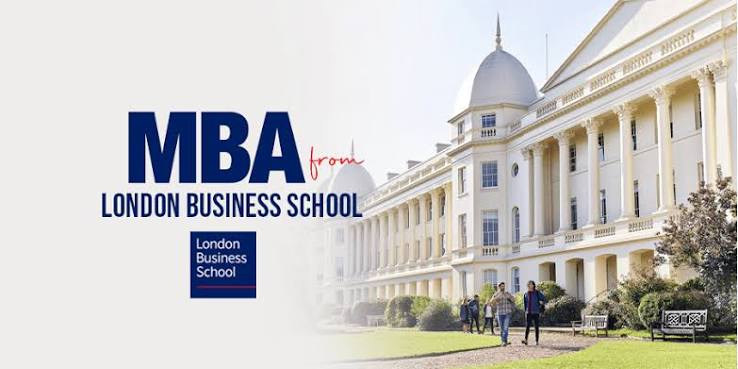
The LBS MBA is a full-time Master of Business Administration programme designed primarily for experienced professionals. It develops leadership, strategic thinking, analytical skills and the ability to work across industries and international markets.
Programme Duration and Flexibility
One distinguishing feature is the choice of three graduation points. Students can complete their MBA in 15, 18 or 21 months, depending on their academic plans, career interests and preferred learning experience.
| Duration | Who Might Prefer It? |
|---|---|
| 15 months | Professionals seeking a relatively faster return to employment. |
| 18 months | Students seeking a balance between career development and time spent studying. |
| 21 months | Students wanting greater flexibility for electives, international experiences or additional career exploration. |
The programme's published tuition does not change with the chosen exit point. However, living expenses will generally be higher when a student spends longer in London.
Curriculum and Learning Experience
London Business School combines core management courses with more than 100 electives. Students can build foundational business knowledge while exploring areas linked to their intended careers.
Core Management Courses
The core curriculum develops a foundation in subjects such as finance, accounting, marketing, strategy, operations and organisational leadership.
Electives and Specialised Learning
Electives allow students to explore interests such as corporate finance, entrepreneurship, technology, management consulting and leadership. Availability and course combinations depend on the academic schedule.
Experiential and Global Learning
The MBA incorporates practical learning opportunities, including consulting projects and international experiences. These allow students to apply classroom concepts to business challenges.
Internships and Career Exploration
Students considering a career change can explore internship opportunities and structured career support. Internship availability depends on recruiting conditions, student experience and the chosen programme pathway.
What Is the LBS MBA Class Profile?
The London Business School MBA has a highly international classroom. The MBA2027 class includes 514 students from 66 nationalities, with women representing 44% of the cohort. This diversity gives students opportunities to learn from different industries, cultures and professional experiences.
MBA 2027 Class Profile
| Class Profile Metric | Official Figure |
|---|---|
| Students | 514 |
| Nationalities | 66 |
| Women | 44% |
| Typical professional experience | Approximately 5–5.5 years |
| Average GMAT | Approximately 645 |
Why Class Diversity Matters
An international MBA classroom can help students understand how businesses operate in different markets. Group projects, classroom discussions and networking provide opportunities to develop cross-cultural communication and decision-making skills.
For Indian applicants, classroom diversity can also be valuable when preparing for global roles requiring collaboration across regions and business functions.
What Are the LBS MBA Admission Requirements?

The LBS MBA admission process considers academic readiness, professional experience, leadership potential and career goals. Applicants must submit the required test scores and application materials, but admissions decisions are based on the complete profile rather than any single metric.
Academic Qualifications
Applicants should demonstrate the academic ability to succeed in a demanding MBA programme. London Business School reviews previous qualifications and academic performance alongside work experience and other evidence of capability.
Professional Work Experience
LBS reports approximately 5.5 years of average work experience. Candidates with less than three years of experience may still be considered when they demonstrate exceptional academics and leadership potential.
The quality of professional experience matters. Applicants should explain their responsibilities, business impact, career progression and contributions to their organisations.
GMAT and GRE Requirements
Applicants must have a valid GMAT or GRE score by the deadline for their chosen application round. LBS does not express a preference between the two tests.
For GRE applicants, the school indicates a preference for scores above 160 in both the verbal and quantitative sections. Test results are assessed alongside the rest of the application.
English Language Requirements
Applicants should review the current English-language policy and supporting documentation on the official MBA application page. Language requirements and exemptions depend on the applicant's educational background and the school's rules.
Essays, CV and Professional References
The application requires candidates to explain their professional achievements, career ambitions and reasons for choosing London Business School. A concise CV and a professional reference help the admissions team evaluate career progression and leadership potential.
Application tip: Focus on outcomes rather than listing responsibilities. Explain what you changed, how you contributed and what you learned from significant professional experiences.
What GMAT Score Do You Need for the LBS MBA?

The average GMAT score reported by London Business School is approximately 645 on the current GMAT scale. The school states that its typical class range is 555–805 and that a score around 555 is normally the lower end it considers. These numbers are not admission guarantees.
Understanding GMAT Competitiveness
A score above the average may strengthen academic evidence, but an applicant with a lower score can still present a competitive overall profile. Likewise, a high score cannot compensate automatically for unclear goals, limited professional impact or a weak application.
| GMAT Consideration | Admissions Interpretation |
|---|---|
| School-reported average | Approximately 645 on the current scale |
| Typical class range | 555–805 |
| Score above the average | May demonstrate stronger test performance, but does not guarantee admission |
| Score below the average | Requires evaluation alongside academic performance, experience and other application strengths |
| GRE alternative | Accepted; LBS prefers verbal and quantitative scores above 160 |
Indian applicants should avoid treating an unofficial nationality-based GMAT cutoff as an admissions rule. LBS evaluates candidates individually.
For detailed score interpretation and preparation guidance, read our LBS MBA GMAT score guide.
What Is the LBS MBA Acceptance Rate?

London Business School does not publicly provide a consistently verified official MBA acceptance rate. Therefore, applicants should not treat third-party estimates as confirmed admission probabilities.
How Competitive Is Admission?
Admission is competitive because the school evaluates candidates across academic readiness, leadership experience, career direction and potential contributions to the classroom.
A stronger application typically demonstrates measurable achievements, meaningful leadership examples, clear career goals and specific reasons for choosing LBS.
Rather than estimating your chances from a single test score, assess the complete strength of your profile and the evidence supporting your future plans.
How Much Does the LBS MBA Cost for Indian Students?

The published LBS MBA tuition fee for the August 2026 intake is approximately ₹1.55 crore (£123,950). Students must also budget for accommodation, daily living expenses, travel and other personal costs. The school charges the same tuition regardless of whether students graduate in 15, 18 or 21 months.
LBS MBA Tuition and School Fees
| Fee Component | Illustrative Cost in INR | Published GBP Amount |
|---|---|---|
| Tuition, August 2026 intake | ₹1,54,93,750 | £123,950 |
| Student Association Fee | ₹50,000 | £400 |
| Initial commitment payment | ₹4,37,500 | £3,500 |
| Subsequent reservation payment | ₹8,12,500 | £6,500 |
Important: The commitment and reservation payments are deducted from the total tuition. They are not additional tuition charges. Both are described by LBS as non-refundable. The exact payment schedule should be checked against your admission offer.
All INR amounts above use ₹125 per £1 as an illustrative planning rate. Applicants should use their bank's actual foreign-exchange rate when preparing payments.
Estimated Living Expenses in London
Living expenses vary significantly with accommodation, lifestyle and the number of months spent in London. The following figures are illustrative budgeting scenarios, not official LBS expense estimates.
| Expense | Estimated Monthly Cost |
|---|---|
| Accommodation | ₹1,25,000–₹1,87,500 (£1,000–£1,500) |
| Food and groceries | ₹31,250–₹50,000 (£250–£400) |
| Local transport | ₹12,500–₹22,500 (£100–£180) |
| Personal and miscellaneous spending | ₹25,000–₹43,750 (£200–£350) |
| Illustrative monthly total | ₹1,93,750–₹3,03,750 (£1,550–£2,430) |
Total Estimated MBA Budget
For a 15-month stay, the illustrative living budget above works out to approximately ₹29.06–₹45.56 lakh (£23,250–£36,450). Adding the published tuition and Student Association Fee produces a planning subtotal of approximately ₹1.85–₹2.01 crore (£147,600–£160,800).
This subtotal excludes visa-related charges, the applicable healthcare surcharge, international flights, programme-related travel, financing costs and other individual expenses. Students remaining in London for 18 or 21 months should budget for the additional months.
For official tuition and scholarship information, see the London Business School fees and financing page.
What Scholarships and Funding Options Are Available for the LBS MBA?
London Business School offers scholarships and financing options to help eligible students fund their MBA. According to its published funding information, admitted students are automatically considered for its scholarship awards. Receiving funding is not guaranteed.
Scholarships Offered by London Business School
The school maintains a portfolio of scholarship opportunities that can consider factors such as merit, background, leadership and financial circumstances. Eligibility and award amounts vary.
Merit-Based Scholarships
These awards may recognise academic achievements, professional performance, leadership potential and other strengths in an applicant's profile.
Need-Based Financial Support
Some funding options take financial circumstances into account. Applicants should check the eligibility conditions and any financial documentation required for individual awards.
Leadership and Diversity Scholarships
Selected awards support applicants whose backgrounds, experiences or leadership achievements align with the scholarship's objectives. The available portfolio can change between admissions cycles.
Education Loans and Employer Sponsorship
Students can also explore education loans, personal savings and financial assistance from employers. For Indian applicants, loan comparisons should consider interest rates, collateral requirements, repayment periods and currency-related costs.
Employer sponsorship may be appropriate for professionals whose organisations expect them to return with additional management or leadership skills.
Funding advice: Prepare your financing strategy before accepting an offer. Scholarship applications, loan decisions and foreign-currency payments can operate on different timelines.
How Do You Apply for the LBS MBA?
Applicants submit their materials through London Business School's online application system. The process evaluates academic preparation, professional achievements, personal qualities and career goals before a final admission decision.
Step-by-Step MBA Application Process
- Review eligibility: Check the programme's academic, professional and testing expectations.
- Choose an application round: Select a deadline that allows sufficient time for tests, essays and references.
- Prepare the GMAT or GRE: Complete the required test before the applicable deadline.
- Organise academic records: Prepare transcripts and other supporting educational documents.
- Update your CV: Highlight professional progression, responsibilities and measurable achievements.
- Write your application essays: Explain your career goals, personal strengths and reasons for pursuing an MBA at LBS.
- Arrange your professional reference: Choose someone who can discuss your performance and leadership potential.
- Submit the application: Complete the online form and verify the supporting information.
- Attend the interview if shortlisted: Prepare to discuss professional decisions, career plans and contributions to the class.
- Review the decision: Follow the school's instructions regarding offers, waitlisting or future applications.
LBS MBA Application Deadlines for August 2027
London Business School states that the August 2027 MBA intake has three application rounds. Deadlines are set at 17:00 UK time. As the application calendar is cycle-specific, candidates should verify the exact dates and decision timetable before submitting.
Use the official LBS MBA application calendar for current deadlines, application questions and document requirements.
LBS MBA Essays
The August 2027 application includes a career-goals essay, a personal uniqueness essay and an optional essay. Applicants should confirm the exact wording in the application portal.
| Essay | Topic | Word Limit |
|---|---|---|
| Essay 1 | Post-MBA goals, previous experience and how LBS will help | 500 words |
| Essay 2 | What makes you unique | 200 words |
| Optional essay | Additional relevant information for the Admissions Committee | 500 words |
Strong essays explain why the applicant wants an MBA now, identify realistic professional objectives and show how the programme supports those goals. Personal examples are more persuasive than generic statements about prestige.
Read our LBS MBA essays guide for detailed writing advice.
Interview Preparation
Shortlisted applicants are interviewed by alumni or senior admissions staff. Interview preparation should include professional achievements, examples of leadership, teamwork, setbacks and the reasons behind future career plans.
Avoid memorised answers. Prepare specific examples and communicate what you learned from important experiences.
What Is the LBS MBA Ranking in 2026?

London Business School ranked joint fourth globally in the Financial Times Global MBA Ranking 2026. This places the programme among the highest-ranked MBAs in that edition of the ranking.
How Should Applicants Interpret MBA Rankings?
Rankings can help applicants compare institutions, but different ranking providers use different methodologies. A school's position may change because of the criteria, reporting year and weighting used.
Applicants should evaluate rankings alongside employment outcomes, programme flexibility, cost, location and suitability for their intended careers.
For an Indian student considering a career in Europe, London Business School's location and professional network may be particularly relevant. However, ranking position alone does not establish the programme's financial return.
What Are the Career Outcomes and Salaries After the LBS MBA?
According to the official LBS MBA2025 employment results, 88% of graduates received an employment offer within three months of graduation, while 86% accepted an offer within that period. Consulting, finance and technology were major destinations for graduates.
LBS MBA Employment Outcomes
| Employment Metric | Reported Result |
|---|---|
| Received an offer within three months | 88% |
| Accepted an offer within three months | 86% |
| Consulting | 40% |
| Finance | 25% |
| Technology | 24% |
The industry percentages describe reported career destinations and should not be interpreted as admission or placement guarantees for future students.
Career Opportunities Across Industries
Management Consulting
Consulting is an important career destination for graduates. Potential opportunities include strategy development, business transformation, operations and organisational consulting.
Finance and Investment Roles
Finance-focused graduates may pursue investment banking, corporate finance, financial services, investment management or related opportunities depending on previous experience and recruiting conditions.
Technology and Product Management
Technology careers can include product management, business operations, strategy and commercial leadership roles. Applicants targeting a major functional switch should evaluate the skills and experience expected by recruiters.
Entrepreneurship and General Management
Students planning entrepreneurial careers or leadership positions can use electives, projects and the professional network to develop business ideas and management capabilities.
What Is the Average Salary After the LBS MBA?
Salary outcomes vary substantially by industry, country, seniority, function and compensation structure. The official employment report provides salary information by sector and other categories, making it more useful than a single currency-converted global figure. When evaluating salaries, applicants should distinguish base pay from bonuses, identify the salary currency and check whether reported figures use nominal exchange rates or purchasing-power-parity adjustments.
For verified compensation figures and complete reporting methodology, consult the official LBS MBA career outcomes and employment report.
Salary planning tip: Compare realistic compensation for your intended job and location, rather than assuming the reported global average will apply to your individual outcome.
How Should Indian Applicants Prepare for the LBS MBA?
Indian applicants should approach the LBS MBA as both an admissions decision and a career investment. A strong strategy connects academic preparation, professional achievements, financial planning and realistic post-MBA opportunities.
Build a Strong Professional Profile
Admissions teams need evidence of career progression and leadership. Indian applicants from engineering, consulting, finance, technology, family business and other backgrounds should explain their achievements in terms that an international audience can understand.
Use measurable business outcomes where available. Explain the scale of your projects, your individual contribution and the decisions you influenced.
Develop a Clear Career Transition Plan
Applicants should identify their target industry, role and preferred market after graduation. A credible plan considers previous experience, transferable skills and the recruiting requirements of the intended career.
For example, someone moving from technology delivery into product strategy should explain why the transition is logical and how an MBA will help bridge their skill gaps.
Plan Funding and Currency Exposure
Studying in London requires careful financial preparation. Tuition is charged in pounds, so Indian students should account for currency fluctuations, banking charges, education-loan terms and spending in the UK.
Prepare a budget with room for unexpected expenses rather than financing the degree entirely around an optimistic salary expectation.
Understand Post-Study Employment Considerations
Indian graduates planning to work in the UK should review the immigration route applicable at the time of graduation, employer sponsorship requirements and job-specific eligibility criteria. These rules can change during the period of study.
An MBA can strengthen professional skills and access to career resources, but it does not guarantee a visa, a job offer or permanent employment abroad.
How Does the LBS MBA Compare With Other Global MBA Programmes?
The LBS MBA may be especially attractive to applicants who value London's business environment, an international classroom and flexible programme duration. However, the right school depends on the applicant's intended career and geographic priorities.
Factors to Compare Before Choosing an MBA
| Decision Factor | What to Evaluate |
|---|---|
| Programme duration | Time away from work, internship opportunities and flexibility |
| Total cost | Tuition, living expenses, scholarships and financing |
| Career destination | Employer recruitment, industry opportunities and geographical access |
| Class profile | Experience levels, international representation and professional diversity |
| Career support | Coaching, alumni access, recruiting events and internship resources |
| Personal fit | Learning style, networking interests and long-term objectives |
Applicants comparing LBS with INSEAD, Oxford Saïd or other leading schools should use the latest official employment reports and fee information from each institution before making a final choice.
Is the LBS MBA Worth It for Indian Students?
The LBS MBA can be a worthwhile option for Indian professionals with clear international career goals, relevant prior experience and a realistic funding strategy. Its value depends on how well the programme supports the applicant's intended career transition.
When the Programme May Be a Good Fit
LBS may suit professionals seeking opportunities in consulting, finance, technology, entrepreneurship or general management. Its international classroom, London location and flexible duration can support career exploration and professional networking.
When Applicants Should Reconsider
Applicants should evaluate alternatives if the financial commitment creates substantial repayment pressure, their target career has limited recruiting opportunities or a full-time international MBA is not necessary for their intended progression.
How to Evaluate Return on Investment
A useful ROI assessment compares the complete cost of education with realistic future earnings, career progression and non-financial benefits.
Include tuition, accommodation, financing interest, foregone income and expected employment location. Consider multiple career scenarios rather than relying on a single salary estimate.
Practical takeaway: The strongest reason to pursue an MBA at London Business School is a credible career plan that benefits from its specific learning opportunities, recruiting environment and international network.
Conclusion
The LBS MBA offers an international learning environment, flexible study options and access to an extensive professional network. For Indian applicants, it is worth considering when the programme aligns with clear career ambitions and a manageable financial plan. Research the official requirements, prepare a thoughtful application and evaluate employment opportunities before making your decision.