
 Abhyank Srinet


Table of Contents
Are you interested in pursuing a Master's in Engineering Management (MEM) but unsure about the best program to choose? Look no further than the MEM Consortium! This blog will provide you with a comprehensive overview of the MEM Consortium, including its course structure, career opportunities, and program details. The MEM Consortium is a collaboration between top universities, offering aspiring engineering managers a unique opportunity to gain a well-rounded education and prepare for leadership roles in the dynamic world of technology and innovation.
Whether you're a recent engineering graduate or an experienced professional looking to advance your career, this blog will equip you with the knowledge and insights needed to make an informed decision about your MEM journey. So, let's dive in and explore the exciting world of the MEM Consortium!
What is MEM Consortium?
What is MEM Consortium? The MEM Consortium, or Master of Engineering Management Programs Consortium, is a partnership between top U.S. universities aimed at offering a top-notch education in engineering management. This consortium helps bridge the gap between the fast-paced technology sector and effective management strategies. By focusing on best practices, innovative curriculums, and industry feedback, the MEM Consortium ensures its programs are high-quality and relevant. It also provides a strong network of students, alumni, and faculty to support career growth and job placement. Through the MEM Consortium, graduates are well-prepared for leadership roles and can make significant contributions to their companies.
Key Facts about the MEM Consortium:
| Feature | Details |
|---|---|
| Founded | 2011 |
| Member Institutions | MIT, Duke, Northwestern, Cornell, Dartmouth, Johns Hopkins, Tufts, University of Southern California, Purdue |
| Program Focus | Integrates engineering and business education, designed for technical professionals aiming for leadership roles |
| Unique Offering | Extensive networking opportunities, industry-relevant curriculum, and a strong emphasis on real-world applications |
| Comparison with MBA | MEM programs require a STEM undergraduate degree, unlike many MBA programs, making MEM graduates more suited for technology-focused leadership roles |
The MEM Consortium, or MEMPC, is at the forefront of meeting the demand for skilled engineering managers. This small group of highly selective and forward-thinking professional graduate engineering management programs is dedicated to several key goals:
- Maintaining outstanding, industry-relevant academic program by sharing best practices, curricular innovations, benchmarking studies, industry input, and student feedback, the MEM Consortium ensures its programs remain top-tier and relevant to industry needs.
- The consortium offers a robust network of MEM students, alumni, and faculty, facilitating career progress and placement. This network is invaluable for connecting talented individuals with opportunities that match their skills.
- Through joint outreach ventures, the MEM Consortium highlights the value of the MEM degree to businesses and industries, showcasing how MEM graduates can significantly contribute to their companies.
- The consortium aims to raise awareness of the Master of Engineering Management degree, expanding its value-added opportunities by forging partnerships with businesses.
The MEM Consortium consists of renowned institutions such as Cornell University, Dartmouth College, Duke University, Johns Hopkins University, Massachusetts Institute of Technology, Purdue University, Northwestern University, Tufts University, and the University of Southern California. These universities collaborate to provide a premier MEM program that equips students with the skills needed to excel as leaders in the tech industry.
MEM Consortium Program Structure

The course structure of the Master of Engineering Management (MEM) Consortium programs is designed to provide students with a well-rounded education that combines core business principles with advanced engineering methods. The core courses of the MEM Consortium programs typically include subjects such as accounting, finance, marketing, decision tools, leadership, and organizational behaviour. These courses provide a solid foundation in business principles and help students develop essential managerial skills.
In addition to the core courses, MEM Consortium programs offer a range of elective courses that allow students to tailor their education to their specific interests and career goals. These electives draw from various disciplines, including engineering, management, and entrepreneurship, enabling students to explore specialized areas such as data analytics, product management, or innovation.
The table below represents the core and elective modules offered in the MEM Consortium program:
| Core Modules |
| ||||||||||||
|---|---|---|---|---|---|---|---|---|---|---|---|---|---|
| Elective Modules |
|
MEM Consortium: Member Universities and Program Specifics
MEMPC group includes prestigious universities like Cornell, Dartmouth, Duke, Johns Hopkins, MIT, Northwestern, Purdue, Tufts, and USC, each offering unique strengths and course structures. This consortium of universities collaborates to steer students with high potential toward finding the perfect blend of technology expertise and business acumen, empowering them to become leaders of future enterprises.
Explore the engineering management programs listed below for further details.
| Member Universities | Course Duration |
| Cornell University | 9 months (On-Campus), 2 years (Distance) |
| Dartmouth College | 15 months |
| Duke University | 12 months |
| Johns Hopkins University | 12–18 months (Residential) 18 months – 5 years (Distance) |
| Massachusetts Institute of Technology | 12 – 21 months |
| Northwestern University | 9-15 months |
| Purdue University | 12 months or 24 months options |
| Tufts University | 12-15 months of full-time on-campus study (MSIM) |
| University of Southern California | 24 months |
Career Prospects and Job Market for MEM Graduates
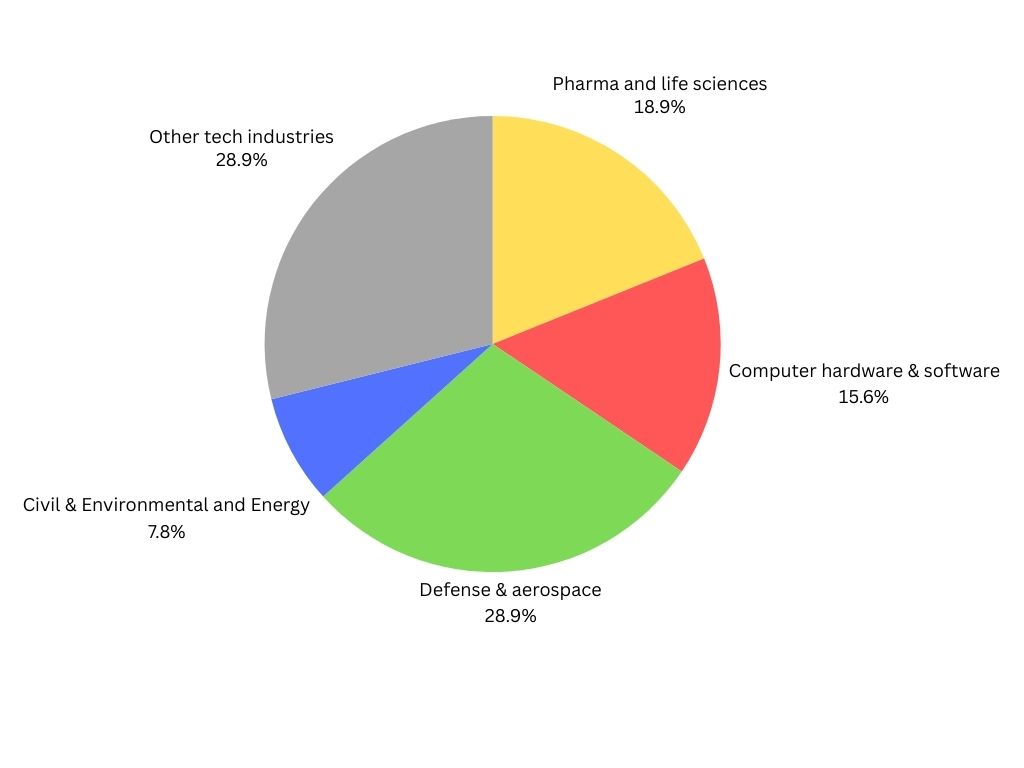
So, Here find the Alumni who are employed in top industries.
Is a Master's in Engineering Management (MEM) worth it? The answer lies in the vibrant employment landscape that MEM graduates step into. MEM program graduates find themselves in a realm of diverse career opportunities, propelled by their unique blend of technical prowess and managerial acumen.Delving deeper, let's explore where MEM graduates find themselves post-graduation. Statistics reveal a compelling narrative: 90% of MEM alumni secure employment in the technology sector. This staggering figure underscores the relevance and demand for MEM-trained professionals in tech-driven industries. In comparison, only 27% of MBA alumni land jobs in the technology sector after completing their degree.
In essence, the MEM Consortium equips graduates with the skills and expertise sought after by top companies across various industries, particularly in the ever-evolving tech landscape. This blend of technical proficiency and managerial finesse positions MEM graduates as coveted assets in today's job market, offering them a plethora of exciting career paths to explore and excel in.
Top Recruiters for Engineering Management Graduates

The Master of Engineering Management (MEM) degree is highly valued by top companies across various sectors, recognizing the unique blend of technical and managerial skills that MEM graduates bring to the table. These companies are eager to hire MEM graduates who can effectively bridge the gap between engineering and business, leveraging their technical expertise to drive innovation and strategic decision-making. As a result, jobs after Engineering Management are plentiful, with MEM graduates having a wide range of job opportunities available to them, from leading multinational corporations to innovative startups.
The table below showcases a list of top companies that highly value the Master of Engineering Management (MEM) degree, reflecting the diverse range of industries where MEM graduates are in demand for their unique blend of technical and managerial skills:
| Technology |
| ||||
| Finance |
| ||||
| Consulting |
|
MEM VS MBA Degree
When considering a graduate degree in management, two popular options are the Master of Engineering Management (MEM) and the Master of Business Administration (MBA). While both degrees share some similarities, they have distinct differences in terms of focus, duration, work experience requirements, and tuition fees. So, the question arises, "Is Engineering Management better than MBA"?
The MEM degree is designed for engineers and technical professionals who want to transition into management roles. It provides a comprehensive understanding of business principles and technical skills, making it ideal for those who wish to lead in technology-driven environments. The MEM program, often offered by the MEM Consortium, equips students with the necessary tools to excel in both technical and managerial aspects.
On the other hand, the MBA degree is a more general management degree that caters to professionals from various backgrounds. It focuses on developing leadership and strategic skills applicable across a wide range of industries. MBA programs typically emphasize broad business concepts, such as finance, marketing, and operations, preparing graduates for diverse management roles.
The table below highlights these differences to help you make an informed decision.
| Feature | MEM | MBA |
|---|---|---|
| Focus | Technical management, engineering, and business | General management, leadership, and business |
| Duration | Typically 1-2 years | Typically 2 years, with part-time and online options |
| Work Experience | No work experience required | Typically requires 3-5 years of work experience |
| Tuition Fees | $30,000 - $60,000 | $50,000 - $200,000+, with top schools costing over $200,000 |
| Curriculum | Emphasizes technical and engineering aspects (60% technical, 40% business) | Emphasizes business and management principles (80% business, 20% technical) |
| Career Paths | Suitable for engineering and technical management roles | Suitable for general management, leadership, and entrepreneurship roles |
| Specialization | Limited specialization options | Offers extensive specialization options in various fields (e.g., finance, marketing) |
Related Blogs:
- Engineering Management Salary
- Best Colleges for Engineering Management
- Masters in Engineering Management cost
Conclusion
In conclusion, the MEM Consortium represents a beacon of innovation and excellence in engineering management education. With its pioneering approach and strong industry focus, it prepares students to become the future leaders of the technology industry. By providing a unique blend of technical expertise and managerial acumen, along with opportunities for customization and hands-on experience, the MEM Consortium equips graduates to thrive in today's dynamic business landscape, driving innovation and success in their organizations.