
 Abhyank Srinet


Table of Contents
A STEM MBA in USA combines management education with quantitative subjects such as analytics and management science. Harvard, Stanford, Booth, MIT Sloan, Kellogg, Columbia, Haas, Tepper and Duke offer STEM-designated MBAs, while Michigan Ross offers a qualifying Management Science specialization. Eligible F-1 graduates may apply for a 24-month STEM OPT extension after their initial 12-month OPT, allowing up to 36 months of work authorization. Eligibility depends on the degree and employment conditions.
Introduction
A STEM MBA in USA can suit applicants who want to combine business leadership with analytical decision-making. These programmes remain management degrees, but include quantitative learning relevant to consulting, finance, technology, operations and other business functions. Your choice should depend on your career goal, previous experience and the courses offered by each school.
For Indian applicants, the decision also involves a substantial financial commitment and an understanding of U.S. work authorization. Before applying, compare the exact STEM pathway, annual tuition, total study budget and official employment outcomes. This guide separates those factors so you can build a shortlist based on your needs.
What is a STEM MBA?
A STEM MBA is an MBA with a qualifying designation connected to science, technology, engineering or mathematics. In business education, this often relates to management science, quantitative methods and analytics. It does not necessarily mean earning a separate technology degree, learning software engineering or choosing a technology career.
The designation may cover the entire MBA or depend on completing an approved specialization. Harvard’s entire MBA is STEM-designated for the Class of 2025 onward, while Michigan Ross offers a qualifying Management Science specialization. Confirm the degree classification and course requirements with the school before applying.
STEM OPT: Up to 36 Months of Work Authorization
Eligible F-1 graduates may apply for a 24-month STEM OPT extension after their initial 12-month post-completion OPT. Together, these can provide up to 36 months of work authorization. This is conditional authorization, rather than an automatic three-year job entitlement or a separate STEM MBA visa.
ICE’s guidance explains that qualifying students need an eligible degree, related employment, an employer participating in E-Verify and a completed Form I-983 training plan. Work with your school’s designated school official to confirm eligibility and application requirements.
Which Top U.S. Business Schools Offer STEM MBAs?
Leading schools offering a STEM MBA in USA include Harvard, Stanford, Chicago Booth, MIT Sloan, Kellogg, Michigan Ross, Columbia, Berkeley Haas, Carnegie Mellon Tepper and Duke Fuqua. STEM eligibility may apply to the entire MBA degree or depend on completing a qualifying specialisation.
The table compares 2026–27 annual or first-year tuition, Class of 2025 median annual base salaries and published GMAT class-profile statistics. Financial figures follow the format INR (original USD).
Currency note: INR figures are approximate conversions using an illustrative rate of ₹96 per US$1, rather than a live exchange rate.
| School | STEM MBA Programme / Pathway | Annual / First-Year Tuition, 2026–27 | Median Annual Base Salary, Class of 2025 | Reported GMAT Score — Current Exam / Focus Edition |
|---|---|---|---|---|
| Harvard Business School | Full-Time MBA; STEM-designated degree | ₹81.37 lakh ($84,760) | ₹1.77 crore ($184,500) | 685 median, Class of 2027 |
| Stanford Graduate School of Business | Full-Time MBA; STEM-designated degree | ₹85.62 lakh ($89,187) | ₹1.78 crore ($185,000) | 689 average, Class of 2027 |
| University of Chicago Booth | Full-Time MBA; STEM-designated degree | ₹86.38 lakh ($89,976) | ₹1.68 crore ($175,000) | 670 average, Class of 2027 |
| MIT Sloan School of Management | Full-Time MBA; STEM-designated programme | ₹88.22 lakh ($91,892) — includes mandatory programme fee | ₹1.68 crore ($175,000) | 675 median, Class of 2028; profile includes LGO students |
| Northwestern Kellogg | Two-Year Full-Time MBA; STEM-designated programme | ₹84.99 lakh ($88,536) | ₹1.68 crore ($175,000) | 687 average, Class of 2027 |
| University of Michigan Ross | Full-Time MBA with qualifying Management Science specialisation | ₹80.59 lakh ($83,946) — international/non-resident tuition | ₹1.63 crore ($170,000) | 681 average, Class of 2027 |
| Columbia Business School | Full-Time MBA; STEM-designated degree | ₹90.15 lakh ($93,908) | ₹1.68 crore ($175,000) | 690 average, students entering in 2025 |
| UC Berkeley Haas | Full-Time MBA; STEM-designated programme | ₹89.04 lakh ($92,755) — estimated non-resident tuition and mandatory fees | ₹1.61 crore ($167,250) | 675 median, Class of 2027 |
| Carnegie Mellon Tepper | Full-Time MBA; STEM-designated programme | ₹80.82 lakh ($84,186) | ₹1.54 crore ($160,000) | 659 average, Class of 2027 |
| Duke Fuqua | Daytime MBA; STEM-designated programme | ₹80.35 lakh ($83,700) | ₹1.54 crore ($160,000) | 605–715 middle 80% range, Class of 2028; average or median not listed on the current profile |
Fee notes: MIT’s figure includes a mandatory programme fee of ₹2.11 lakh ($2,200). Michigan Ross uses international/non-resident tuition. Berkeley Haas includes estimated non-resident tuition and mandatory fees.
How to read this comparison: Tuition figures cover one academic year, not the entire two-year MBA. Accommodation, insurance, travel and other expenses increase the total cost. Salary figures represent reported median annual base pay and exclude bonuses. GMAT figures describe enrolled students; they are not required admission cutoffs. All scores in this table use the current GMAT/Focus scale.
What Should Indian Applicants Consider?
- Calculate the full budget: Compare the complete two-year cost of attendance, including tuition, housing, insurance, travel and other expenses.
- Compare funding options: Review available scholarships, education-loan interest rates and repayment costs.
- Understand salary figures: INR equivalents help compare amounts, but graduates working in the USA earn in dollars and pay local taxes and living expenses.
- Use GMAT scores as benchmarks: Consider the reported class scores alongside your academics, work experience, leadership and career goals.
- Check the STEM pathway: Where eligibility depends on a specialisation, such as Michigan Ross, confirm the qualifying course requirements when planning your MBA.
How Does a STEM MBA Compare With a Non-STEM MBA?
Both options can provide general management education and support careers across business functions. The main distinction is the qualifying degree designation and its relevance to STEM OPT. Curriculum differences must be checked school by school; a non-STEM MBA can also include analytics courses.
Here are some reasons why pursuing a STEM MBA in the USA is a worthwhile investment:
- Degree designation: A STEM MBA has a qualifying STEM designation for the whole degree or a specific specialisation. A non-STEM MBA does not have this designation.
- Curriculum: STEM MBAs may emphasise management science and quantitative methods alongside business subjects. Non-STEM MBAs can also offer quantitative courses and electives.
- Post-completion OPT: Eligible F-1 graduates of STEM MBAs may apply for initial OPT and a 24-month STEM extension. Non-STEM MBA graduates may apply for initial OPT, but that MBA alone does not establish eligibility for the STEM extension.
- Career options: Both offer access to business careers. Opportunities depend on your skills, experience, school recruiting and employer requirements.
- Salary: A STEM designation alone does not guarantee higher pay. Compare official school employment reports using the same salary metric and graduation year.
STEM MBA vs Non-STEM MBA: Which Is Better?
Choosing between a STEM MBA and a traditional MBA is like picking between two different routes to the same goal. Both teach strong business skills and can lead to great jobs, but they focus on different things.
A STEM MBA mixes business with technical subjects like data, science, and technology. A traditional MBA focuses more on general business areas like finance and marketing. Here’s a simple comparison to help you decide which one fits your career goals better:
The table below highlights the differences between STEM MBA and Traditional MBA programs:
| Factor | STEM MBA | Non-STEM MBA |
|---|---|---|
| Work Stay in the U.S. | Gives longer work time after graduation for international students through extended OPT. | Shorter work time after graduation. Might feel rushed to find a job. |
| Job Skills | Combines business and tech skills. These are in high demand, especially in tech companies. | Focuses more on business skills. May lack deep tech knowledge. |
| Career Paths | Jobs in tech industries like IT, data science, and healthcare. | Jobs in finance, consulting, marketing, and more. |
| Demand | Very high demand due to tech and business mix. | Also in demand, but more general. |
| Where It's Available | Mostly in the USA, but growing in other countries. | Available all over the world – USA, UK, Canada, Germany, Australia. |
| Subjects You Learn | Tech-focused: data, innovation, and analytics. | Business-focused: finance, marketing, and leadership. |
| Starting Salary | $110,000–$130,000 (can be higher in tech roles). | $90,000–$110,000 depending on the industry. |
| Industry Growth | High growth in tech areas like IT, fintech, and consulting (10–15%). | Steady growth in many industries (5–8%). |
| Tech Skills | Learn tools like coding, data tools, and tech systems. | Focus more on leadership, communication, and teamwork. |
| Job Roles | Product Manager, Business Analyst, Tech Consultant. | Finance Manager, Marketing Director, Operations Analyst. |
| Networking | Tech events, hackathons, meetups with tech leaders. | General business events with a wide network. |
| Internships | Great options in top tech companies like Google, Amazon, Microsoft. | Internships across many fields: finance, healthcare, retail. |
STEM MBA vs Non-STEM MBA Which is Better?
What Are the Eligibility Requirements for a STEM MBA in USA?
Admissions requirements depend on the school and programme. A class’s average work experience or test score describes enrolled students; it should not be presented as a minimum requirement. Check the official application instructions for your target intake.
- Academic qualification: A recognized undergraduate degree meeting the school’s equivalence requirements.
- Admissions test: GMAT, GRE or another accepted assessment, depending on the programme.
- Professional experience: Evidence of responsibilities, achievements and career development.
- Application materials: Transcripts, resume, essays and recommendations.
- English proficiency: Tests and exemptions depend on the programme and your educational background.
For example, Booth does not require a minimum GMAT or GRE score. Columbia’s MBA FAQ states that international applicants do not need a language test such as TOEFL. These policies should not be generalized to every school.
Current GMAT Scores and Previous-Edition Scores
The current GMAT uses a 205–805 total-score scale, while the previous edition used 200–800. When comparing class profiles, identify the exam version, entering class and whether the school reports a mean or median. An older class average should not be presented as a current admissions requirement.
What Should You Know About Each STEM MBA Programme?
Use these profiles to understand each school’s STEM pathway, then review its official curriculum before shortlisting. STEM designation does not make every school’s courses, admissions policies or career outcomes identical.
1. Harvard Business School (HBS)
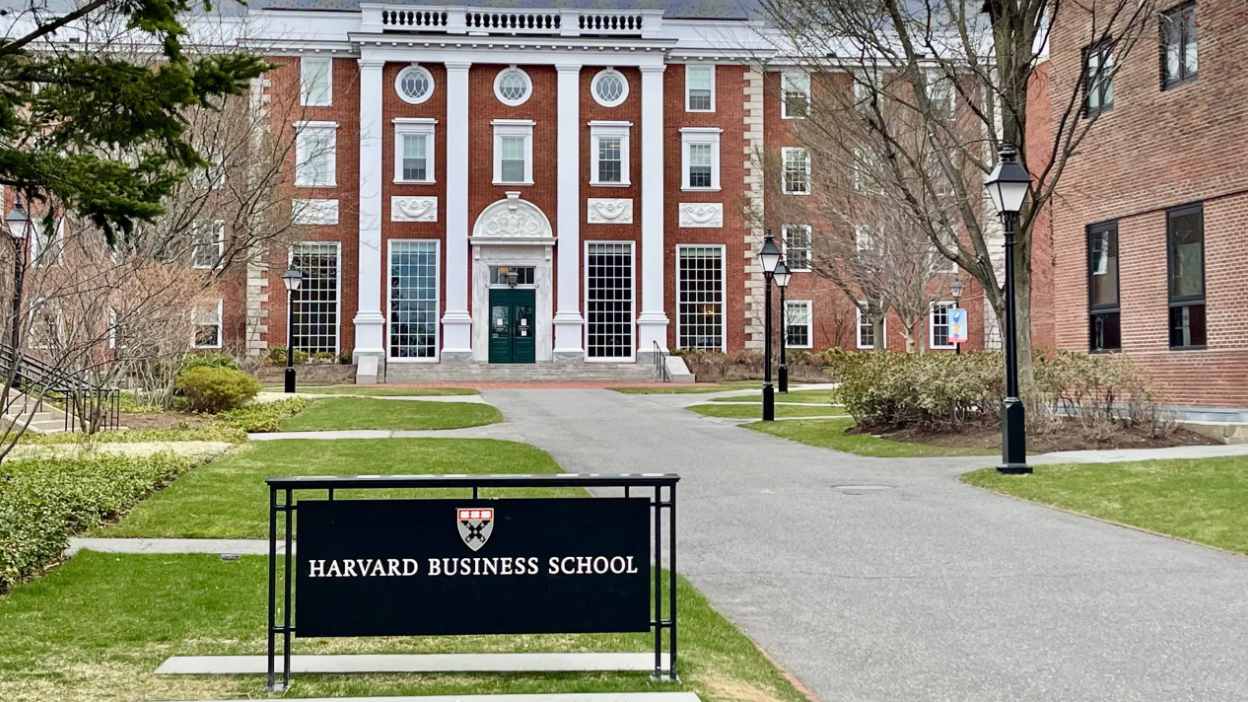
Harvard Business School (HBS) stands as a beacon of excellence in business education, revered worldwide for its transformative programs and groundbreaking research. Situated in Boston, Massachusetts, HBS offers a range of MBA programs designed to cultivate visionary leaders capable of driving positive change in the global business landscape. With a focus on innovation, entrepreneurship, and leadership development, HBS equips its students with the skills, knowledge, and network needed to tackle complex challenges and seize new opportunities.
Harvard Business School (HBS) is one of the foremost institutions offering STEM MBA programs in the USA. In January 2020, HBS unveiled a dedicated program catering to STEM students, seamlessly integrated into its renowned Harvard M BA program.
Here is a table outlining the fundamental details of the program:
| Criteria | Details |
|---|---|
| Bachelor's Degree | A four-year bachelor's degree is required |
| English Proficiency | Required if your undergraduate degree was not taught entirely in English. HBS discourages applications with IELTS below 7.5 or TOEFL below 109 on the traditional scale, or 5 on the new scale. These are guidance thresholds, rather than stated minimum requirements. |
| Tuition Fee | ₹81.37 lakh ($84,760); excludes living expenses, health fees and insurance |
| Average GMAT | 730 |
| Average Work Experience | 4.9 years |
| Average MBA Salary | ₹1.77 crore ($184,500); excludes bonuses |
| Top Post-MBA Industries | Consulting, Finance, Corporate Management |
| Useful Links |
2. Ross School of Business
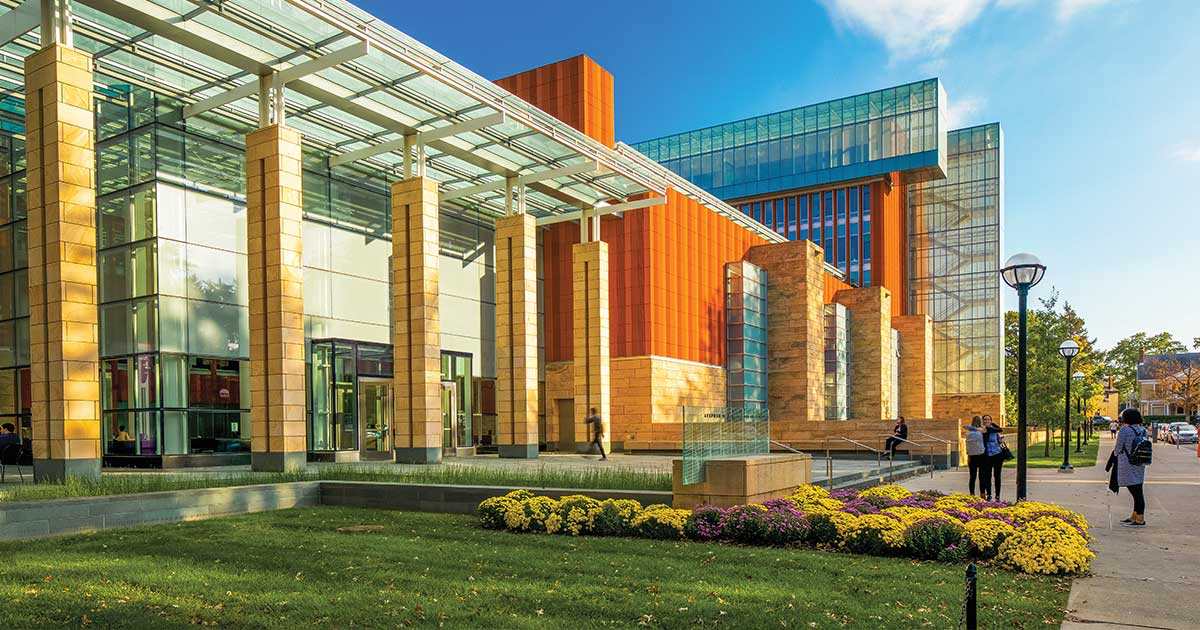
Nestled in Michigan, the Ross School of Business stands out with impressive rankings, securing the #19 spot in the QS World Rankings and #15 according to Times Higher Education. At the forefront of its offerings is its renowned STEM MBA program in the USA. Accredited and esteemed, the Michigan Ross MBA program is designed to meet the evolving demands of the business landscape.
With a curriculum spanning seven diverse fields, including cutting-edge topics like artificial intelligence in business and marketing analytics, Ross students are equipped with specialized knowledge tailored to industry needs. This specificity, combined with the school's esteemed reputation and accreditation, positions graduates for success in today's competitive business environment.
Here is a table outlining the fundamental details of the program:
| Criteria | Details |
|---|---|
| Bachelor's Degree | The equivalent of a U.S. bachelor's degree required |
| English Proficiency | TOEFL score of at least 100 or IELTS score of 7.0 for international students |
| Work Experience | 5.8 years |
| Tuition Fees | ₹80.59 lakh ($83,946) for international/non-resident students; additional expenses apply |
| Average GMAT | 681 on the current GMAT/Focus exam; 731 on the previous GMAT 10th Edition. These are class averages, not admission cutoffs. |
| Top Post-MBA Industries | Consulting, Finance, Tech, Health, Engineering, and more |
| Average MBA Salary | ₹1.63 crore ($170,000) |
| Useful Links |
3. Booth School of Business
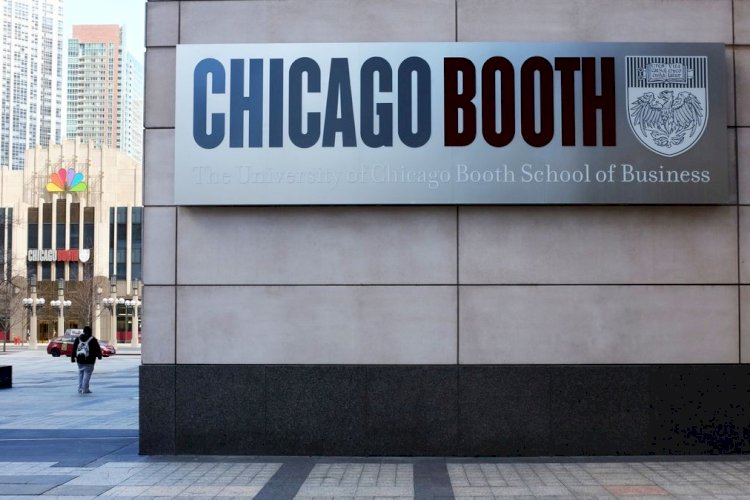
Chicago Booth MBA program was announced in April 2020 (which is one of the top programs of STEM MBA in USA). Notably, Booth's offering stands out for its breadth, presenting students with a choice of 13 distinct disciplines.
Whether delving into entrepreneurialism, exploring behavioral science, or mastering econometrics and statistics, students benefit from a tailored curriculum that aligns with their career goals and interests.
This flexibility, coupled with Booth's esteemed reputation and commitment to academic excellence, positions graduates for success in today's competitive landscape. By providing students with the opportunity to specialize in their chosen fields, Booth empowers them to become dynamic leaders poised to tackle the challenges of tomorrow.
Here is a table outlining the fundamental details of the program:
| Criteria | Details |
|---|---|
| Bachelor's Degree | College or University degree equivalent to a four-year American baccalaureate degree |
| English Proficiency | TOEFL score of at least 100 or IELTS score of 7.0 for international students |
| Work Experience | 5 years |
| Tuition Fees | ₹86.38 lakh ($89,976); additional expenses apply |
| Average GMAT | 732 |
| Top Post-MBA Industries | Consulting, Finance, Tech, Health, Engineering, and more |
| Average MBA Salary | ₹1.68 crore ($175,000) |
| Useful Links |
4. Columbia Business School (CBS)

The EMBA and Columbia MBA program at Columbia have been given the stem distinction, reflecting the institution's dedication to incorporating cutting-edge disciplines into its curriculum. Situated in the vibrant heart of New York City, Columbia offers students an unparalleled blend of academic rigor and real-world exposure.
Despite the city's fast-paced and competitive environment, Columbia Business School fosters a sense of community and camaraderie among its students, providing them with a supportive and nurturing atmosphere to thrive. Through hands-on learning experiences and innovative teaching methods, Columbia prepares its graduates to excel in today's dynamic and ever-changing business landscape.
With a wide range of MBA programs, including full-time, executive, and specialized master's degrees, CBS caters to the needs of students at different stages of their careers.
Here is a table outlining the fundamental details of the program:
| Criteria | Details |
|---|---|
| Bachelor's Degree | Bachelor's degree is required |
| English Proficiency | TOEFL score of at least 100 or IELTS score of 7.0 for international students |
| Work Experience | No minimum years |
| Tuition Fees | ₹90.15 lakh ($93,908) for the August-entry MBA; additional expenses apply |
| Average GMAT | 730 |
| Top Post-MBA Industries | Consulting, Finance, Technology, Entrepreneurship |
| Average MBA Salary | ₹1.68 crore ($175,000) |
| Useful Links |
5. Duke Fuqua School of Business
Duke University's Fuqua School of Business is globally renowned for its innovative approach to business education and its commitment to developing principled leaders who make a positive impact in the world of business. With a diverse and collaborative community, Fuqua offers a range of MBA programs designed to meet the needs of students at various stages of their careers, from full-time MBAs to Executive MBAs and specialized master's degrees. Known for its rigorous academics, Fuqua emphasizes experiential learning, teamwork, and leadership development, preparing graduates to navigate complex challenges and drive meaningful change in their organizations and beyond.
In 2017, the school began Duke Fuqua MBA program with a certificate in management science and technology, which is a STEM-certified course. About a fraction of the MBA class has registered for the elective course. Duke is one of the Ivy League super-elite US schools. This business school is ranked 10th by US News. The school offers a STEM-designated MBA program (one of the top-picked STEM MBA programs in the USA) with only 13 mandated core classes and more flexibility to select from over 100 electives.
Here is a table outlining the fundamental details of the program:
| Criteria | Details |
|---|---|
| Bachelor's Degree | 4-year bachelor's degree required |
| English Proficiency | Not required for international students |
| Work Experience | No minimum years |
| Tuition Fees | ₹80.35 lakh ($83,700); additional expenses apply |
| Average GMAT | 718 |
| Average MBA Salary | ₹1.54 crore ($160,000) |
| Useful Links |
Benefits of a STEM MBA

Apart from other MBA degrees, STEM MBA programs in the USA offer some benefits. These specific STEM-designated programs offer a pathway to a rewarding career with high earning potential, versatility, and opportunities for innovation and global impact. STEM MBA programs in the USA provide a unique skill set that is in high demand across various industries.
Not to forget sources like the Financial Times rank some of these STEM-designated MBAs among the top MBA programs globally from the view of post-study opportunities, a STEM MBA is more prevalent among recruiters. The abilities that candidates obtain while pursuing these programs, a mixture of technology and business management, can go an extended way in the contemporary business world.
Here are the most prominent advantages you get as a STEM-designated MBA holder student;
1. High Demand in Tech Leadership
STEM MBA graduates are particularly sought after for leadership roles in technology-driven industries such as IT, biotech, and renewable energy. Their ability to bridge the gap between technical teams and business objectives is invaluable in fast-paced, innovation-driven environments.
2. Specialized Career Paths
STEM-designated MBA programs often offer specialized tracks or concentrations tailored to emerging fields like artificial intelligence, blockchain, and sustainable technology. Graduates can pursue careers as AI strategists, blockchain consultants, or sustainability analysts, aligning their expertise with their passion and market demand.
3. Premium Salaries in Fintech
With the rise of fintech (financial technology), STEM MBA holders can command premium salaries in roles such as financial data analysts, algorithmic traders, and cryptocurrency consultants. Their quantitative skills and understanding of financial markets make them indispensable in this rapidly evolving sector.
4. Leadership in Healthcare Innovation
In the healthcare sector, STEM MBA graduates are driving innovation in areas such as digital health, personalized medicine, and medical device manufacturing. They lead cross-functional teams to develop cutting-edge solutions, improve patient outcomes, and navigate complex regulatory landscapes.
5. Impactful Sustainability Management
As companies increasingly prioritize sustainability, STEM MBA graduates with expertise in environmental management, renewable energy, and circular economy principles are in high demand. They help organizations develop and implement sustainable business strategies, reducing carbon footprints and enhancing corporate social responsibility.
6. Global Mobility in Emerging Markets
STEM MBA programs often include international experiences or coursework focused on emerging markets. Graduates gain a deep understanding of global business dynamics and cultural nuances, positioning them for leadership roles in multinational corporations or entrepreneurship ventures in emerging economies.
7. Strategic Partnerships with Tech Giants
Many STEM-designated MBA programs forge strategic partnerships with leading tech companies such as Google, Microsoft, and Amazon. This collaboration provides students with access to real-world projects, mentorship opportunities, and recruitment pipelines, enhancing their employability and industry relevance.
8. Entrepreneurial Ecosystem Support
STEM MBA programs foster entrepreneurship by offering resources such as incubators, startup accelerators, and venture capital networks. Graduates are empowered to launch their tech startups or join early-stage ventures, leveraging their business acumen and technical expertise to drive innovation and create value.
Related Blogs
Conclusion
A STEM MBA in USA can combine management learning with analytical skills and conditional access to extended OPT. Choose a school by its curriculum, exact STEM pathway, total cost and official employment outcomes. Indian applicants should also confirm degree equivalence, funding and international recruiting support before deciding.