🎯Key Takeaways – Michigan Ross MBA vs Darden MBA
✅ Tuition Fees: Ross MBA costs $74,500/year, while Darden MBA is priced at $73,200/year.
✅ Graduate Salary: Average post-MBA salary – Ross: $165,000; Darden: $162,000 annually.
✅ Class Profile: Ross has 380 students; Darden has 352, both offering strong diversity.
✅ Program Strengths: Ross excels in consulting & tech; Darden focuses on case-based learning.
✅ Employment Rate: Both schools boast 95%+ job placement within 3 months of graduation.
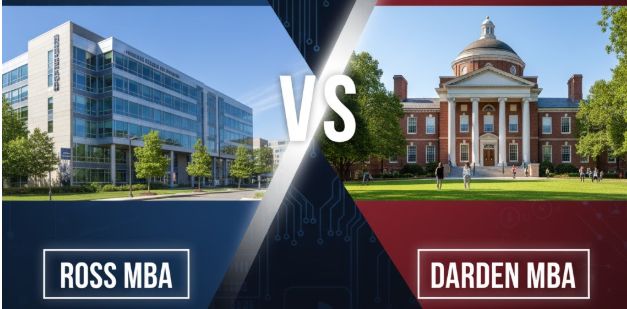
The University of Michigan’s Ross School of Business and the University of Virginia’s Darden School of Business both offer strong academic foundations, exceptional career outcomes, and powerful alumni networks. However, they differ in learning approach, teaching style, and program focus.
While Ross MBA emphasizes action-based learning through real-world projects, the Darden MBA uses the case method to develop analytical and leadership skills. For Indian students aiming to study abroad, understanding the Ross MBA vs Darden MBA comparison is key to making the right choice.
Ross MBA: Overview
![Ross MBA: Overview]()
The Michigan Ross MBA is known for its experiential, hands-on learning model. Its signature Multidisciplinary Action Projects (MAP) course lets students solve real-world business challenges for global companies. This approach develops leadership, analytical thinking, and teamwork skills. Located in Ann Arbor, Ross offers a collaborative environment and access to a large corporate network and alumni community across industries.
| Program Duration | 2 years |
| Location | Ann Arbor, Michigan |
| Language of Instruction | English |
| Annual Tuition Fee | USD 75,500 |
| Total Cost of Attendance | USD 200,000 (approx.) |
| Average Post-MBA Salary | USD 165,000 |
| Top Hiring Industries | Consulting, Technology, Finance |
| Employment Rate (3 months) | 96% |
| International Students | 37% |
| Global Ranking | #21 (Financial Times 2024) |
The Ross MBA focuses on leadership through experience, helping students develop practical skills that translate directly into high-impact business roles. The program’s collaborative culture, combined with its strong corporate ties and international network, makes it one of the most sought-after MBAs in the world.
Darden MBA: Overview
![Darden MBA: Overview]()
The Darden MBA at the University of Virginia stands out for its 100% case-method approach. Students analyze more than 500 business cases throughout the program, building strategic decision-making, communication, and problem-solving abilities. Located in Charlottesville, the program offers a tight-knit community, world-class faculty, and strong employer relationships.
| Program Duration | 21 months |
| Location | Charlottesville, Virginia |
| Language of Instruction | English |
| Annual Tuition Fee | USD 74,600 |
| Total Cost of Attendance | USD 195,000 (approx.) |
| Average Post-MBA Salary | USD 162,000 |
| Top Hiring Industries | Consulting, Finance, General Management |
| Employment Rate (3 months) | 95% |
| International Students | 43% |
| Global Ranking | #18 (Financial Times 2024) |
The Darden MBA develops leaders through discussion, reflection, and practice. The case-based format fosters strong analytical and communication skills, preparing graduates to lead diverse teams and make complex business decisions with confidence. Its smaller class size ensures close interaction with faculty and peers.
Ross MBA vs Darden MBA: Comparison Snapshot
| Factor | Michigan Ross MBA | Darden MBA |
| Location | Ann Arbor, Michigan | Charlottesville, Virginia |
| Duration | 2 years | 21 months |
| Ranking (FT 2024) | #21 | #18 |
| Average GMAT | 720 | 720 |
| Average GPA | 3.5 | 3.6 |
| Work Experience | 5 years | 5 years |
| Class Size | 380 | 330 |
| International Students | 37% | 43% |
| Base Salary (Median) | $165,000 | $162,000 |
| Employment Rate (3 months) | 96% | 95% |
This Ross MBA vs Darden MBA comparison shows that both programs are academically rigorous and globally respected, but their student experience and teaching styles vary.
Curriculum & Specializations
The Ross MBA curriculum is built around experiential learning. The MAP program is its centerpiece, where students work directly with companies on real projects. Popular specializations include Strategy, Data Analytics, and Entrepreneurship.
In contrast, the Darden MBA curriculum is entirely case-based. Students engage in interactive discussions that mirror real-world business scenarios. Specializations include Leadership, Finance, and General Management. When comparing Ross MBA vs Darden MBA, Ross leans toward learning by doing, while Darden promotes learning by discussion — two equally effective but distinct approaches.
Global Exposure & Network
Global learning opportunities are a major strength of both programs.
- Ross MBA: Offers global immersion experiences in Asia, Europe, and South America.
- Darden MBA: Features Global Consulting Projects and partnerships with top B-schools like IESE, INSEAD, and Bocconi.
Ross MBA vs Darden MBA alumni network:
- Ross: 58,000+ alumni in 120+ countries
- Darden: 18,000+ alumni in 90+ countries
Ross offers a wider alumni reach, while Darden provides closer mentoring and a tight community.
Class Profile & Diversity
| Criteria | Ross MBA | Darden MBA |
| Average Age | 28 years | 27 years |
| Average Work Experience | 5 years | 5 years |
| Women Representation | 45% | 41% |
| International Students | 37% | 43% |
| Class Size | 380 | 330 |
Both Ross MBA and Darden MBA attract diverse, globally minded cohorts. Darden tends to have slightly higher international representation, while Ross benefits from a larger and more varied class profile.
Financial Aids & Scholarship Opportunities
| Category | Ross MBA | Darden MBA |
| Tuition (per year) | $75,500 | $74,600 |
| Living Expenses | $24,000 | $23,000 |
| Total 2-Year Cost | ~$200,000 | ~$195,000 |
For Indian students, both programs cost around ₹1.6–1.7 crore in total. Living expenses are comparable, though Ann Arbor may be slightly higher. The Ross MBA vs Darden MBA cost difference is minimal, making both competitive in terms of ROI.
Scholarship Opportunities
Ross MBA Scholarships
- Dean’s Fellowship
- Weiser Family MBA Scholarship
- Forte Fellowship (for women)
- Global MBA Fellowship
Darden MBA Scholarships
- Jefferson Fellowship (full tuition)
- Batten Scholars Program
- Darden Worldwide Scholarship
- Need-Based Financial Aid
Both Ross MBA and Darden MBA offer generous scholarships. External options like the JN Tata Endowment and Fulbright-Nehru Fellowship can further reduce expenses for Indian students.
Ross MBA vs Darden MBA: Career Outcomes and Salary
![Ross MBA vs Darden MBA: Career Outcomes and Salary]()
When comparing Ross MBA vs Darden MBA career outcomes, both programs demonstrate exceptional placement rates and competitive compensation packages. Graduates from each school secure high-paying roles across consulting, technology, finance, and general management. However, the two programs differ slightly in their industry focus and recruiter network, shaped by their respective learning styles and institutional strengths.
Ross MBA Career Outcomes
The Michigan Ross MBA program consistently delivers strong post-graduation employment statistics. With a median base salary of $165,000 and an average signing bonus of $30,000, Ross graduates enjoy a fast return on investment within two to three years of completing the program. Nearly 96% of students secure full-time offers within three months of graduation, reflecting the school’s deep corporate partnerships and robust career support system.
The Ross MBA’s focus on action-based learning gives students a competitive edge in industries that value analytical problem-solving and adaptability. Consulting continues to be the most popular destination for Ross graduates, accounting for about 40% of placements, followed by 25% in technology and 15% in finance. Major recruiters include McKinsey & Company, Boston Consulting Group (BCG), Amazon, Deloitte, and Microsoft.
Ross alumni often highlight the versatility of their training the MAP projects and leadership labs build practical expertise that translates easily into global consulting, operations, and product-management roles. The school’s broad alumni network also helps students explore cross-functional career transitions after graduation.
Darden MBA Career Outcomes
The Darden MBA produces equally impressive results. Graduates report a median base salary of $162,000 with an average signing bonus of $35,000, and 95% of students accept job offers within three months of completing the program. The case-method teaching structure, which mirrors real business decision-making, prepares students for high-impact roles in consulting and finance.
Nearly 45% of Darden graduates enter consulting, 20% move into finance, and around 10% join consumer goods or strategy-related positions. Top hiring firms include Bain & Company, JP Morgan, EY, Accenture, and PwC Strategy&. Darden’s Career Development Center works closely with students to align their professional goals with employer expectations, resulting in consistent placement across global markets.
The program’s smaller class size also enhances mentorship and recruiter interaction, giving students personalized guidance throughout the recruitment process. Many Darden alumni advance quickly into leadership roles in consulting and investment firms due to their strong analytical and communication skills honed through case-based learning.
Ross MBA vs Darden MBA: Salary and Placement Comparison
While the Ross MBA vs Darden MBA salary gap is minimal, both programs excel in employment outcomes and career mobility. Ross graduates tend to dominate the technology and operations sectors thanks to their hands-on training and experiential learning approach. In contrast, Darden graduates often find their niche in consulting and finance, where analytical reasoning and communication are key.
Overall, both MBAs provide excellent return on investment, global employer access, and alumni support networks that extend across leading companies worldwide. For Indian students seeking strong job outcomes and long-term career acceleration, either choice guarantees top-tier opportunities.
Which MBA Should You Choose?
![Which MBA Should You Choose?]()
Deciding between the Ross MBA vs Darden MBA depends primarily on your learning preferences, professional goals, and desired classroom environment.
If you prefer a hands-on learning environment that focuses on practical business challenges, the Ross MBA is ideal. Its project-based curriculum (especially the MAP initiative) allows you to apply classroom knowledge directly to real companies, helping you build confidence, teamwork, and leadership experience early in the program. Students aiming for roles in consulting, technology, or operations will find Ross’s corporate exposure particularly valuable.
If you thrive in structured discussions and analytical learning, the Darden MBA may suit you better. Its case-method approach sharpens your decision-making, presentation, and strategic reasoning abilities — essential skills for consulting and finance careers. The smaller class size ensures you’ll receive individual attention and build strong relationships with peers and professors.
In short, the Ross MBA vs Darden MBA decision comes down to learning style: project-based (Ross) versus case-based (Darden). Both schools offer strong ROI, 95%+ placement rates, and access to world-class recruiters. Whether you envision yourself leading strategy at a global firm or managing innovation at a tech giant, both programs will provide the foundation and network to get you there.
Related Blogs
Conclusion
Both Ross MBA and Darden MBA stand as exceptional programs that prepare students to lead in today’s fast-evolving business world. While Michigan Ross champions action-based learning through immersive projects and teamwork, Virginia Darden excels in case-method learning that refines analytical and leadership capabilities.
If you’re a student who learns best by doing and seeks global exposure through real business projects, Ross MBA offers the ideal platform. On the other hand, if you prefer interactive discussions and aim to strengthen your decision-making and communication skills, Darden MBA provides the perfect environment.

 Abhyank Srinet