
 Abhyank Srinet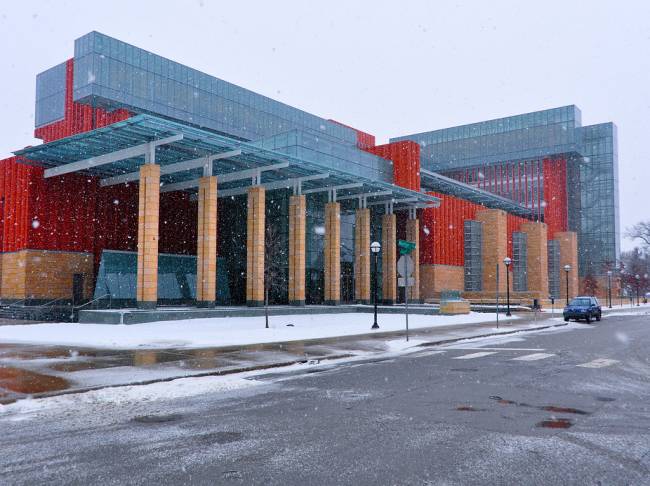


Table of Contents
- Michigan Ross MBA Fees Overview
- In-State vs Out-of-State Tuition: Detailed Breakdown
- Total Cost of Attendance (2-Year MBA)
- Living in Ann Arbor: Detailed Cost Analysis
- Scholarships at the University of Michigan Ross School of Business
- Loans & Financial Aid Options
- Michigan Ross MBA ROI: Is It Worth It?
- Michigan Ross vs Other Top MBA Programs
The Michigan Ross MBA fees for international students are approximately ₹80.64 lakh ($83,586) for the 2026–27 academic year. After adding registration fees, accommodation, food, books, health insurance and personal expenses, the estimated annual cost reaches approximately ₹1.12 crore ($115,939). A two-year planning budget is around ₹2.24 crore ($231,878), although the actual second-year cost may change because Michigan Ross tuition is reviewed annually.
Introduction
Michigan Ross offers a two-year Full-Time MBA built around analytical learning, leadership development, action-based projects and access to the wider University of Michigan network. Understanding the Michigan Ross MBA fees is important because Indian applicants must plan for tuition, housing, food, travel, insurance, visa expenses and currency movements—not tuition alone.
For 2026–27, international tuition is ₹80.64 lakh ($83,586) per academic year. Using current university living-cost estimates, the annual budget can reach approximately ₹1.12 crore ($115,834), while the latest class profile reports an average GMAT Focus score of 681 and the employment report lists a median base salary of ₹1.64 crore ($170,000). In this blog, we explain tuition, living expenses, scholarships, financing, GMAT scores, application deadlines and the total cost for Indian applicants.
Michigan Ross MBA Fees Overview
.jpg)
The fee structure at Ross is clear and consistent, making it easier to estimate your total investment. While it is a public university, the tuition difference between residents and non-residents is relatively small compared with the overall cost of the MBA.
In addition to tuition, the cost of attendance includes academic expenses, living costs and personal spending, all of which contribute significantly to the total MBA investment.
Annual Cost Breakdown
| Cost Component | Michigan Residents | Non-Residents / International |
|---|---|---|
| Tuition | ₹75.82 lakh ($78,586) | ₹80.64 lakh ($83,586) |
| Registration Fees | ₹47,562 ($493) | ₹47,562 ($493) |
| Books & Supplies | ₹1.93 lakh ($2,000) | ₹1.93 lakh ($2,000) |
| Food & Housing | ₹21.49 lakh ($22,276) | ₹21.49 lakh ($22,276) |
| Personal Expenses | ₹7.10 lakh ($7,360) | ₹7.10 lakh ($7,360) |
| Loan Fees | ₹21,610 ($224) | ₹21,610 ($224) |
| Total Annual Cost | ₹1.07 crore ($110,939) | ₹1.12 crore ($115,939) |
Over two years, Michigan Ross MBA tuition and related expenses can reach approximately ₹2.14 crore ($221,878) for Michigan residents and ₹2.24 crore ($231,878) for international students, assuming the current annual costs remain unchanged.
Applying to Ross? Get your profile evaluated free by MiM-Essay experts →
In-State vs Out-of-State Tuition: Detailed Breakdown
Understanding the difference between in-state and out-of-state tuition is essential when analysing the Michigan Ross MBA fees. As a public university, Ross offers reduced tuition for Michigan residents, but the difference is relatively modest compared with the complete programme cost.
For most applicants, especially international candidates, the out-of-state tuition rate applies by default. This makes it important to plan your finances using the higher cost bracket.
Tuition Comparison
| Category | Annual Tuition | 2-Year Tuition |
|---|---|---|
| Michigan Residents | ₹75.82 lakh ($78,586) | ₹1.52 crore ($157,172) |
| Non-Residents / International | ₹80.64 lakh ($83,586) | ₹1.61 crore ($167,172) |
The annual tuition difference is approximately ₹4.82 lakh ($5,000). Over two years, the difference would be approximately ₹9.65 lakh ($10,000) if the tuition rate remained unchanged.
In most cases, international applicants should assume the non-resident tuition rate when planning their budget. Tuition is reviewed annually, so the second-year amount may be different from the current estimate.
Total Cost of Attendance (2-Year MBA)
The Michigan Ross MBA fees should always be evaluated as part of the total cost of attendance, not in isolation. Applicants may underestimate how much accommodation, food, health insurance and personal expenses contribute to the final investment.
Full 2-Year Cost Estimate
| Expense Category | Estimated Cost |
|---|---|
| Tuition | ₹1.61 crore ($167,172) |
| Registration Fees | ₹95,124 ($986) |
| Housing & Living | Approximately ₹42.98 lakh ($44,552) |
| Personal Expenses and Health Insurance | Approximately ₹14.20 lakh ($14,720) |
| Loan Fees | Approximately ₹43,221 ($448) |
| Total Estimated Cost | Approximately ₹2.24 crore ($231,878) |
This calculation assumes that tuition and living expenses remain unchanged during the second year. Michigan Ross states that tuition is determined annually, while the official budget also notes that second-year books and supplies may be slightly lower. The actual two-year amount will therefore depend on future tuition rates and personal spending.
The difference between looking at tuition alone—approximately ₹1.61 crore ($167,172)—and the estimated total cost of approximately ₹2.24 crore ($231,878) is significant. This is why applicants should evaluate ROI using the full investment rather than tuition alone.
Living in Ann Arbor: Detailed Cost Analysis
One of the important parts of planning for Ross is estimating the cost of living in Ann Arbor. Michigan Ross includes accommodation, food, health insurance and personal expenses in its official cost-of-attendance budget.
Monthly Cost Breakdown
Ross does not publish separate official monthly estimates for rent, food and utilities. However, its annual food and housing allowance of ₹21.49 lakh ($22,276) works out to approximately ₹1.79 lakh ($1,856) per month across 12 months.
The personal and miscellaneous allowance, which includes healthcare insurance, is ₹7.10 lakh ($7,360) per year, or approximately ₹59,000 ($613) per month.
City Comparison
Actual living expenses will depend on the type of accommodation, whether the student shares housing, food preferences, transportation and personal lifestyle. Applicants should use the official Michigan Ross cost-of-attendance budget instead of relying on general city-level cost ratings.
Scholarships at the University of Michigan Ross School of Business

Scholarships play a crucial role in reducing the Michigan Ross MBA fees burden and improving affordability.
Major Scholarship Programs
- Ross Merit-Based Scholarships: Awarded based on academic ability, professional achievements, personal accomplishments and potential contribution to the Ross community.
- Dean’s Impact Scholars: Full-tuition scholarships with an additional annual stipend for selected applicants.
- Dean’s Fellows: Full-tuition scholarships for a select group of admitted students.
- Forté MBA Fellowship: A distinction connected to merit-based scholarship funding for eligible applicants who demonstrate leadership and support Forté’s mission.
- Consortium Fellowship: Eligible applicants applying through the Consortium may be considered for merit funding of up to full tuition.
Funding Insights
- All admitted Full-Time MBA applicants are automatically considered for standard merit-based scholarships.
- No separate application is required for most Ross merit scholarships.
- Awards range from ₹9.65 lakh ($10,000) to full tuition.
- Scholarship decisions are generally communicated when the applicant receives the admission decision.
- Scholarships normally reduce tuition but may not cover accommodation, food, travel or all personal expenses.
Michigan Ross officially confirms that merit awards range from $10,000 to full tuition and that applicants are automatically considered during the admissions process.
Our students have secured Ross scholarships. Check your chances →
Loans & Financial Aid Options
Since the total cost is substantial, students may rely on a combination of loans, scholarships, personal savings and family funding to finance their MBA.
US Loan Options
Eligible US citizens and qualifying permanent residents may consider:
- Federal Stafford Loans
- Grad PLUS Loans
International students generally do not qualify for US federal student aid unless they meet eligible non-citizen requirements.
International Loan Options
International applicants may explore:
- Prodigy Finance
- MPOWER Financing
- Private banks and NBFCs
Michigan Ross does not officially endorse one private lender over another. Applicants should compare interest rates, co-signer requirements, repayment periods, processing fees and currency risk before selecting a loan.
Smart Financing Tips
- Compare interest rates and the total repayment amount carefully.
- Check whether the interest rate is fixed or variable.
Plan the repayment timeline using a conservative salary estimate. - Consider the impact of changes in the USD–INR exchange rate.
- Maintain an emergency fund for unexpected expenses.
Avoid calculating affordability using the highest possible salary outcome.
Proper planning can help ensure that the Michigan Ross MBA fees remain manageable over the long term.
What Should Indian Applicants Know About Michigan Ross MBA Fees?

Indian applicants should plan their finances using the non-resident annual tuition of ₹80.64 lakh ($83,586) and the complete annual cost-of-attendance estimate of approximately ₹1.12 crore ($115,939). A two-year planning budget of around ₹2.24 crore ($231,878) is more realistic than looking at tuition alone.
Indian applicants should also consider the following points:
- Currency movement: A weaker rupee can increase the final amount paid even when the dollar-denominated tuition remains unchanged.
- International student fee: F-1 and J-1 students pay ₹96,475 ($1,000) across the fall and winter terms, although Ross includes this amount in the official cost-of-attendance budget.
- Health insurance: International health insurance is mandatory and is included within the personal-expense estimate.
- Scholarships: Indian applicants are automatically considered for Ross merit scholarships ranging from ₹9.65 lakh ($10,000) to full tuition.
- GMAT score: The Class of 2027 has an official average GMAT Focus score of 681, with a middle-80% range of 635–725. Ross does not publish a separate GMAT requirement or cutoff for Indian applicants.
International recruitment: Among foreign-national graduates, 81.6% received a job offer within three months and 87.5% received an offer within six months in the latest employment report. - Loan planning: Applicants using an Indian education loan should include currency conversion charges, interest accrued during study and the possibility of a longer job-search period.
The latest Michigan Ross class profile includes 40% international students, an average GMAT Focus score of 681 and average work experience of 5.8 years.
Michigan Ross MBA ROI: Is It Worth It?
The return on investment is one of the strongest reasons why Ross remains a popular MBA choice. However, ROI depends on the student’s scholarship, loan cost, post-MBA location, industry, salary and ability to secure employment.
Career Outcomes
- Median Base Salary: ₹1.64 crore ($170,000)
- Median Signing Bonus: ₹28.94 lakh ($30,000)
- Received an Offer by Graduation: 78%
- Received an Offer Within Three Months: 86%
- Received an Offer Within Six Months: 92%
- Consulting Median Salary: ₹1.83 crore ($190,000)
- Financial Services Median Salary: ₹1.69 crore ($175,000)
- Technology Median Salary: ₹1.38 crore ($143,000)
The Class of 2025 employment report confirms a median base salary of $170,000, a median signing bonus of $30,000 and a 92% job-offer rate within six months.
ROI Analysis
| Metric | Value |
|---|---|
| Estimated Two-Year Cost | Approximately ₹2.24 crore ($231,878) |
| Median Base Salary | ₹1.64 crore ($170,000) |
| Median Signing Bonus | ₹28.94 lakh ($30,000) |
Michigan Ross does not publish an official MBA payback period. The actual time required to recover the investment will depend on scholarships, taxes, loan interest, living costs after graduation and whether the graduate works in the US or returns to India.
The official median salary indicates strong earning potential, especially in consulting and finance. However, students should not assume that the full programme cost can automatically be recovered within two or three years.
Michigan Ross vs Other Top MBA Programs

Comparing Ross with other top MBA programs helps you understand its position on cost, salary outcomes, and overall value.
| School | Tuition | Avg Salary | ROI |
|---|---|---|---|
| Michigan Ross | ₹80.64 lakh ($83,586) | ₹1.64 crore ($170,000) | Lowest tuition among these four |
| Kellogg MBA | ₹85.41 lakh ($88,536) | ₹1.69 crore ($175,000) | Higher than Ross |
| Booth MBA | ₹86.80 lakh ($89,976) | ₹1.69 crore ($175,000) | Higher than Ross |
| Yale MBA | ₹87.70 lakh ($90,900) | ₹1.69 crore ($175,000) | Highest tuition among these four |
Michigan Ross has the lowest published 2026–27 annual tuition among the four programmes in this comparison. Kellogg, Booth and Yale currently report a higher median base salary of $175,000, compared with Ross’s $170,000.
Ross continues to offer a competitive balance of tuition cost, scholarship opportunities and career outcomes among leading US MBA programmes.
Useful Links:
- Michigan Ross MBA GMAT & Class Profile
- Michigan Ross MBA Salary
- Is Michigan Ross MBA Worth it?
- Michigan Ross MBA Interview Questions
Conclusion
Michigan Ross MBA fees for international students are ₹80.64 lakh ($83,586) per year, while the estimated two-year cost is around ₹2.24 crore ($231,878). With a median base salary of ₹1.64 crore ($170,000) and scholarships ranging from ₹9.65 lakh ($10,000) to full tuition, Ross can offer strong value. Indian applicants should still plan carefully for exchange-rate changes, loan interest and international job-market risks before making the investment.


