
 Abhyank Srinet


Table of Contents
GMAT LCM means the least common multiple, or the smallest positive number divisible by two or more given numbers. In the current GMAT, Quantitative Reasoning has 21 questions in 45 minutes, so LCM questions must be solved quickly using prime factorization, listing multiples, or the GCF-LCM formula. LCM is mainly tested in number properties, divisibility, remainders, and word problems involving repeated cycles or common timings.
Introduction
GMAT LCM questions test how quickly you can find the least common multiple and apply it to number properties, divisibility, remainders, and repeated-cycle problems. Since the current GMAT Quantitative Reasoning section has 21 questions in 45 minutes, you need fast methods like prime factorization, listing multiples, and the GCF-LCM relationship instead of long calculations.
LCM is important because many GMAT Quant problems do not ask for it directly. Instead, it appears in questions about common timings, shared multiples, repeating events, and minimum possible values. In this blog, we will explain GMAT LCM concepts, shortcuts, formulas, examples, and practice questions to help you solve these problems with more accuracy and speed.
Understanding the Least Common Multiple (LCM)
The Least Common Multiple (LCM) is the smallest multiple that two or more numbers share. In simpler terms, it’s the lowest number that is evenly divisible by each of the given numbers. Understanding LCM is essential for GMAT quant because it helps in solving questions related to fractions, divisibility, and complex word problems that involve finding a common basis among numbers.
For example, if you want to find the LCM of 4 and 6, you list their multiples:
- Multiples of 4: 4, 8, 12, 16, 20…
- Multiples of 6: 6, 12, 18, 24…
The smallest multiple they share is 12, making it the LCM. On the GMAT, LCM questions may not always be this straightforward; they often involve applying the concept to larger sets of numbers or in combination with other arithmetic operations.
LCM is frequently tested in questions that involve adding or subtracting fractions with different denominators or determining scheduling problems where multiple events occur at different intervals. By mastering the concept of LCM, you’ll gain an edge in tackling such problems efficiently, a critical skill for success on the GMAT LCM section.
Methods to Find the Least Common Multiple
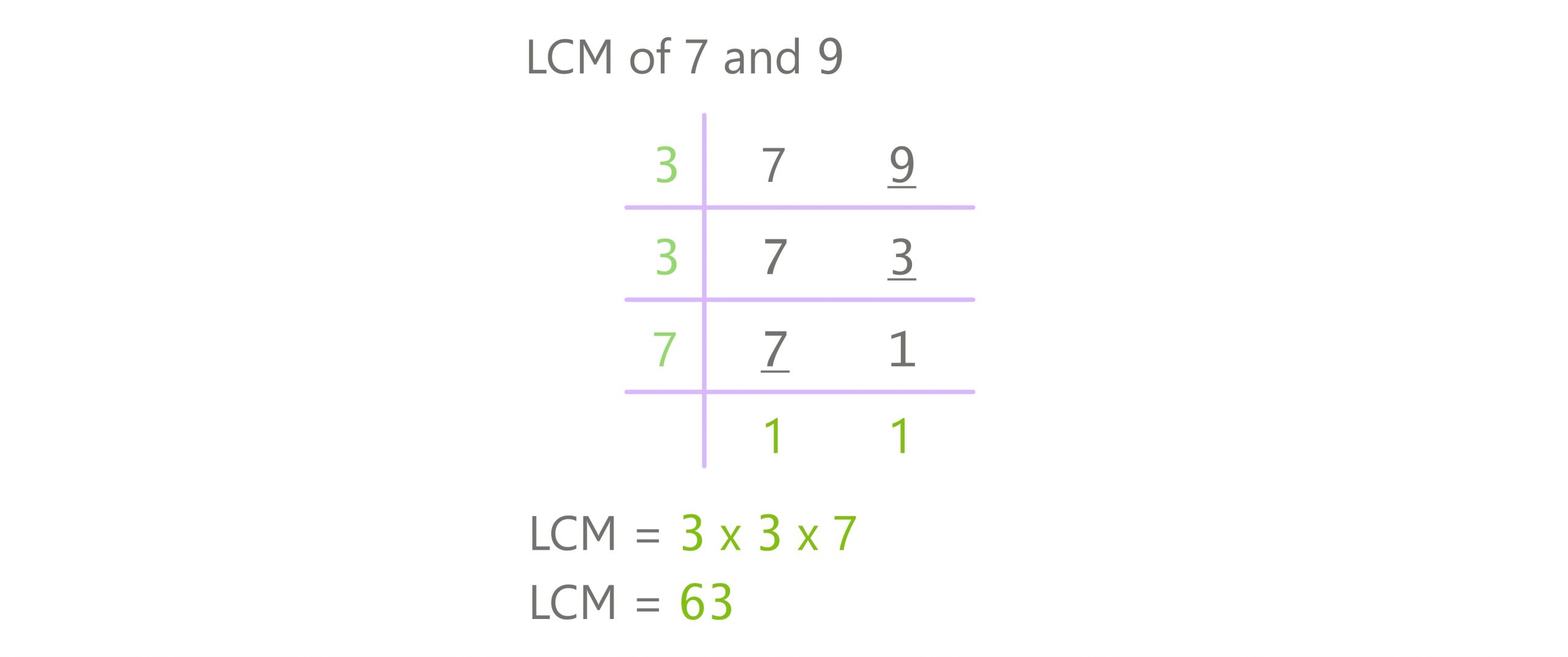
There are several methods to determine the Least Common Multiple (LCM), and understanding each can be very helpful for the GMAT. Let’s explore the most commonly used techniques:
| Method | Steps to Use | Best For |
|---|---|---|
| Prime Factorization | Factor numbers, use highest powers | Larger numbers |
| Listing Multiples | Write multiples until match found | Smaller numbers |
| GCD-LCM Formula | Use LCM = (a × b) / GCD(a, b) | Situations where GCD is known easily |
Finding LCM Using Prime Factorization
The prime factorization method involves breaking down each number into its prime components. To find the LCM using this method, you:
- Write down the prime factorization of each number.
- Take the highest power of each prime factor that appears in any of the numbers.
- Multiply these factors together.
For example, to find the LCM of 12 and 18:
- Prime factorization of 12 = 22 × 3
- Prime factorization of 18 = 2 × 32
The LCM is obtained by taking the highest power of each prime factor:
- 22 (from 12) and 32 (from 18)
Thus, LCM = 22 × 32 = 4 × 9 = 36
LCM Through Listing Multiples
Another straightforward method to determine the LCM is by listing the multiples of each number until you find the smallest common one. This works well for smaller numbers but becomes less efficient for larger ones.
For instance, if you want to find the LCM of 8 and 10:
- Multiples of 8: 8, 16, 24, 32, 40, …
- Multiples of 10: 10, 20, 30, 40, …
The smallest common multiple is 40, making it the LCM.
Using GCD to Find LCM: The GCD-LCM Formula
There is also a useful relationship between the GCD and LCM that can make calculations easier:
LCM (a, b) = (a × b) / GCD (a, b)
This formula is particularly useful for larger numbers where finding the GCD can simplify the LCM calculation. For example, for numbers 15 and 20:
- GCD of 15 and 20 is 5.
- LCM = (15 × 20) / 5 = 60
Each of these methods is effective depending on the type of question presented in the GMAT LCM section. Understanding all three approaches will help you decide which one to apply based on the specific problem, making it easier to solve LCM-related questions quickly and accurately.
Application of LCM on GMAT Problems

The Least Common Multiple (LCM) is a common concept tested in various forms on the GMAT, especially in questions involving number properties, word problems, and fractions. Understanding its application in these contexts can give you a significant advantage in the quantitative section.
| Problem Type | Example | Method Used | Answer |
|---|---|---|---|
| Scheduling Problem | Two events every 15 and 20 days | GCD-LCM Formula | 60 days |
Common GMAT Questions Involving LCM
LCM questions often appear in word problems where you need to determine the alignment of events or values over a certain time frame. For example, a typical question might involve two machines working at different intervals, and you need to figure out when they will work simultaneously again. In such cases, the LCM of the intervals helps determine the answer.
Another example involves fractions—when adding or subtracting fractions with different denominators, you find the LCM to determine the least common denominator. On the GMAT, this type of question requires efficient calculation to solve within the limited time available.
How LCM is Tested in GMAT Problem-Solving Questions
- Work and Time Problems: LCM is frequently used to determine when two or more activities will occur simultaneously. For instance, if two buses depart a station at different intervals, finding the LCM of their intervals will give you the time they next leave together.
- Least Common Denominator in Fractions: To add or subtract fractions with different denominators, the LCM of the denominators is required to find a common base. This method helps simplify the calculation and solve the problem more efficiently.
Examples: Typical LCM Questions You Might See on the GMAT
- Scheduling Problem: "Two events occur every 12 and 15 days, respectively. In how many days will both events coincide again?"
- Here, you need to find the LCM of 12 and 15, which is 60. Thus, both events will coincide again after 60 days.
- Fraction Addition: "What is the sum of 1/4 and 1/6?"
- To solve this, you need the LCM of 4 and 6, which is 12. The fractions become 3/12 + 2/12 = 5/12.
By practicing how the GMAT LCM is tested in various scenarios, you'll develop a strong grasp of using this concept to solve diverse types of problems effectively. This knowledge will not only improve your accuracy but also help you manage time better during the GMAT exam.
GMAT LCM Practice Questions with Answers
.jpg)
Practice is key when it comes to mastering the GMAT LCM problems. This section will provide you with examples that mirror the types of questions you can expect in the GMAT. Use these GMAT practice questions to sharpen your understanding and boost your problem-solving speed.
Sample GMAT LCM Questions with Solutions
Question 1
What is the LCM of 8, 12, and 18?
Solution:
- First, find the prime factorization of each number:
- 8 = 23
- 12 = 22 × 3
- 18 = 2 × 32
- Take the highest power of each prime factor: 23 and 32.
- LCM = 23 × 32 = 8 × 9 = 72
Question 2
A train arrives every 15 minutes, and a bus arrives every 20 minutes. If both leave the station at the same time, when will they next arrive together?
Solution:
- To determine when both will arrive together again, find the LCM of 15 and 20.
- Prime factorization:
- 15 = 3 × 5
- 20 = 22 × 5
- Take the highest powers: 22, 3, and 5.
- LCM = 22 × 3 × 5 = 4 × 3 × 5 = 60
- Prime factorization:
Answer: 60 minutes
Question 3
Find the LCM of 9 and 14 using the GCD-LCM formula.
Solution:
- Use the GCD-LCM formula:
- GCD of 9 and 14 is 1 (as they have no common prime factors).
- LCM = (9 × 14) / 1 = 126
Question 4
Two lights blink at intervals of 10 seconds and 15 seconds. If they start blinking at the same time, after how many seconds will they blink together again?
Solution:
- Prime factorization:
- 10 = 2 × 5
- 15 = 3 × 5
- Take the highest powers: 2, 3, and 5.
- LCM = 2 × 3 × 5 = 30 seconds
Question 5
What is the LCM of 24 and 36?
Solution:
- Prime factorization:
- 24 = 23 × 3
- 36 = 22 × 32
- Take the highest powers: 23 and 32.
- LCM = 23 × 32 = 8 × 9 = 72
Question 6
A gardener waters two sets of plants at intervals of 18 minutes and 24 minutes. If both sets are watered at 8:00 AM, when will they both be watered together again?
Solution:
- Prime factorization:
- 18 = 2 × 32
- 24 = 23 × 3
- Take the highest powers: 23 and 32.
- LCM = 23 × 32 = 8 × 9 = 72 minutes
Tips for Solving LCM Questions Quickly on the GMAT
- Identify the Method: Depending on the numbers, choose the most efficient method (prime factorization, listing multiples, or the GCD-LCM formula).
- Use Prime Factorization for Larger Numbers: For larger numbers, prime factorization is often quicker and more reliable.
- Practice Mental Math: The faster you can identify prime factors or common multiples, the better your chances of solving these problems within the time limit.
Practicing these questions and understanding the approaches used will prepare you to confidently handle GMAT LCM problems. Remember, each second saved on these calculations can be crucial to managing the overall time effectively during the GMAT.
Related Blog:
- Properties of Integers GMAT
- GMAT Profit and Loss
- Percentage Questions GMAT
- GMAT Percentage Tricks
- Compound interest GMAT
Conclusion
GMAT LCM is an important number properties topic because it helps solve questions on divisibility, remainders, repeated cycles, common timings, and minimum possible values. Since GMAT Quantitative Reasoning has 21 questions in 45 minutes, students need fast methods like prime factorization, listing multiples, and the GCF-LCM relationship. With regular timed practice, GMAT LCM questions become easier to solve with accuracy and speed.